Two Loons

Two loons on a lake. A studio, apparently.

We take card games seriously.
Not ourselves.

Two Loons makes two things. Frustration is a card game for the people you actually want to play cards with — at camp, on the couch, or three states away. Human Mode is a family planner that won't close. They're for the same reason: the phone you're already holding should hand you back to people, not away from them.

Play Frustration Open Human Mode

Teaching the loons how to shuffle…

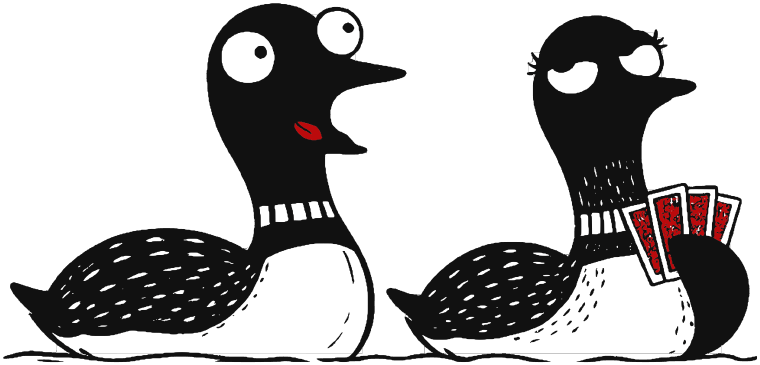
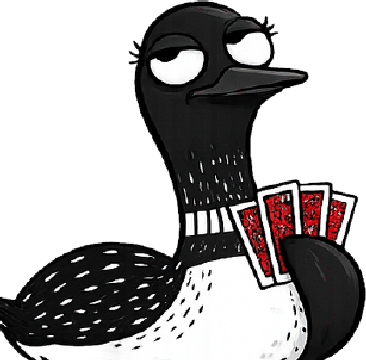
Two cartoon loons — one shouting, one holding a hand of cards

What we make

One card table, one planner, and the same two people arguing about both.

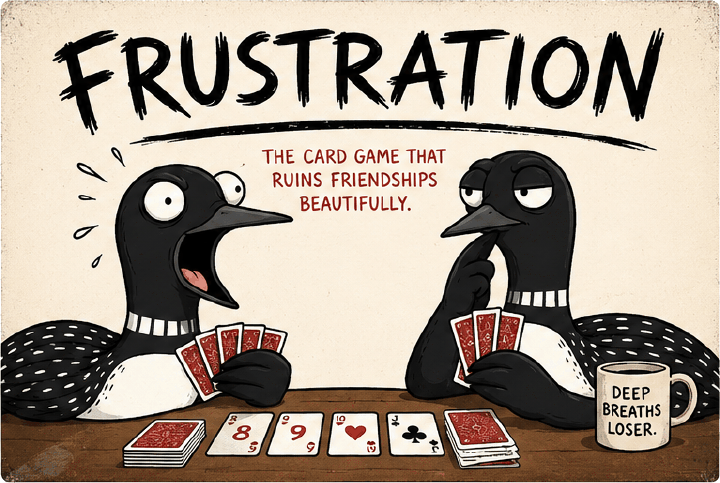
Frustration — the card game that ruins friendships beautifully

The first game · in beta

Frustration

Eleven levels. Eleven cards a hand. Only 2s are wild, and they know it. Pass one phone round the table, or everyone on their own with a five-character code. Get up mid-game and your seat plays itself until you're back — politely, and badly.

Your rank climbs on matches finished, never won. Your suit is worked out, not chosen. And the one number on your card that matters is how many hands you've played with somebody else.

Play it now Everything about it

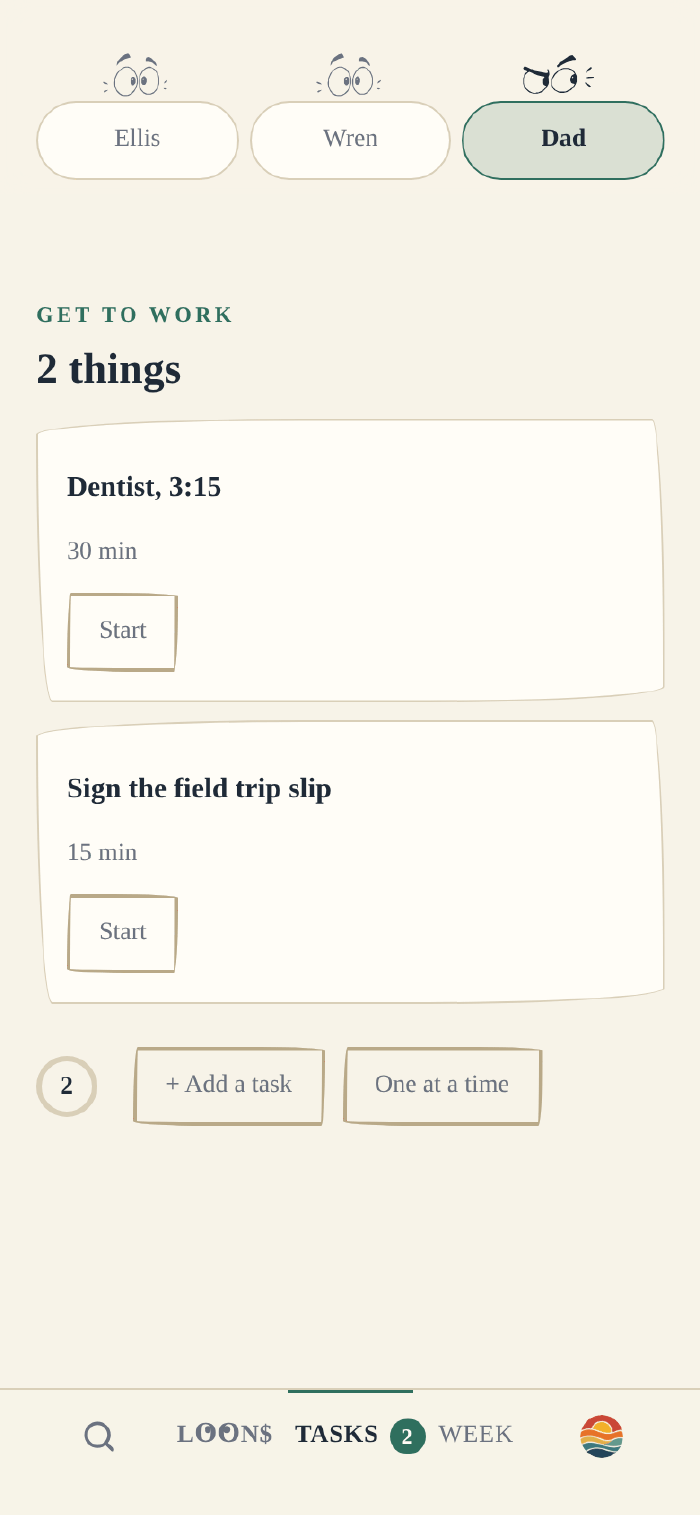
Human Mode on a phone: three names across the top, each with a small drawn face, and under “Get to work” two cards — Dentist, 30 min, and Sign the field trip slip, 15 min — each with a Start button.

The planner · in beta

Human Mode

Real life. Together. A planner for a whole house that asks who you are once and then stops asking — no logins, no passwords for the kids, one family code. Everyone sees the same week; everyone gets to choose how theirs opens.

It pays in LOON$ for starting things, not just finishing them, and nothing is ever taken away. Ten ranks, from Caveman to Full Human, and the ladder is printed on your own screen so nobody is watching you without you knowing.

Open it How it works

Why we build any of it

A reasonable use of a phone.

We're all on our phones anyway. The question is only whether the phone takes you somewhere or takes you away.

Frustration started as a deck of cards at a lake: a screen porch, a week of pancakes and bug spray, somebody quietly taking the entire table apart while pretending not to. Then the people moved, and had kids, and work got worse. Somebody can usually give you two or three hours; what they can't give you is a fourteen-hour round trip and a whole weekend. So the game doesn't happen, and neither does the evening, and that's the actual loss — not the cards.

Human Mode started at a kitchen table, with a school planner that lived inside a laptop and stopped existing every time the laptop closed. A 1990s paper planner worked because it was an object, in your own hand, at a fixed moment. Digital school got rid of all three. So we rebuilt them, for one kid first and then for the whole house — because a house is not one person, and the parents turned out to be the likeliest to quit.

Both are the same bet. A card game that needs three other people. A planner that shows the whole house one week. Neither is something you scroll. Each ends with you having spent time with somebody you'd otherwise have missed — which is the only thing we'd have built any of this to produce.

Nobody logs in to start

Frustration has no login wall and isn't getting one: pass-and-play never asks, and a table code never asks. Human Mode asks who you are once, then stops asking; a kid joins a house with a code, not a password.

Earned beats stated

Your suit in the game is worked out from how you play. Your rank in the planner is what you did — Starter, Asker, Finisher — with the sentence that says so underneath. Nobody types their own title on either.

Nothing that only goes down

The game's one important number is a count of hands played together, and it cannot be lost. The planner never fines, never deducts, never claws back. Both are built for somebody who'd quit over a total that could fall — because that's all of us.

Built for a kitchen table

The game is rated 8+ and everything expressive on it comes off a written list, so there's nothing to moderate. The planner is a whole house on one screen, and the safety net is printed where the kid can read it. Same room, either way.

The .io part

One table. Eventually every game.

Underneath Frustration is a card engine that doesn't care what game it's running. It deals, it holds the rules, it keeps turn order, it makes eleven cards legible on a phone. Every game we add is that same table wearing something different.

Now

Frustration, in beta. Bugs first; everything else waits on it, on purpose.

Started

Your family's rules. Untick levels, reorder, set the clock, turn on Jokers Wild. A rule is data.

Next

Rummy and crazy eights, then cribbage, euchre, hearts, spades and pitch. Same table, different face.

Someday

You build it, we run it, we split it. Not live, and we're not pretending otherwise.

The card games page The whole ladder, the formats, and what the table does so a game doesn't have to.

Two Loons accounts

One account, eventually. Two, honestly, today.

Both apps were built so that nobody has to sign in to use them. An account is the thing that lets a new phone find its way back to you, and that's all it's for.

In Frustration today

Your phone is your account

  • The browser you're in holds your seat, your handle, your loon card and your friends. Nothing to make, nothing to remember.
  • Signing in with Apple or Google attaches a recoverable name to that same account, so a new phone can find it. It lives on your profile, in the browser — never at the door.
  • If the new phone already built up a card of its own, the two are folded together rather than one overwriting the other. Friends, handle and seats all survive.

In Human Mode today

Your house has a code

  • The first person sets the house up; everyone else joins with a six-character family code and taps their own name. Kids never see a password.
  • Grown-up things — the exchange rate, what a child may change — sit behind the adult's own PIN, and the ladder that tells parents anything is printed where the kid can read it.
  • An email and password is optional, and exists so a parent can walk in from a new phone. It is the beginning of the account below, not a wall in front of the app.
  1. Where it's going

    A Two Loons account holds the rest

    One sign-in, at twoloons.io, that a Frustration card and a Human Mode profile both hang off. Email and password first; Apple, Google, a magic link and two-step later. Family codes stay, because they answer a different question — which house, not which person. The parent PIN goes, because an account that already knows you're the grown-up has answered it.

  2. What won't change

    No login wall. Anywhere.

    Pass-and-play will never ask. A table code will never ask. A child on a parent's phone is the household, and the household is the account. The sign-in exists for the day you drop your phone in the lake, and for no other day.

Meet the loons

They're us. We're a married couple who love each other very much and would like, more than anything, to watch the other one lose.

Chuck

The loud one

Announces the plan. Announces the plan again. Executes roughly none of it, then takes it personally when somebody else does. Has never drawn a card quietly in his life.

Dot

The quiet one

Hasn't said a word in six rounds. Is holding everything you need. Will lay every bit of it down the turn after you commit, and will not gloat about it, which is worse.

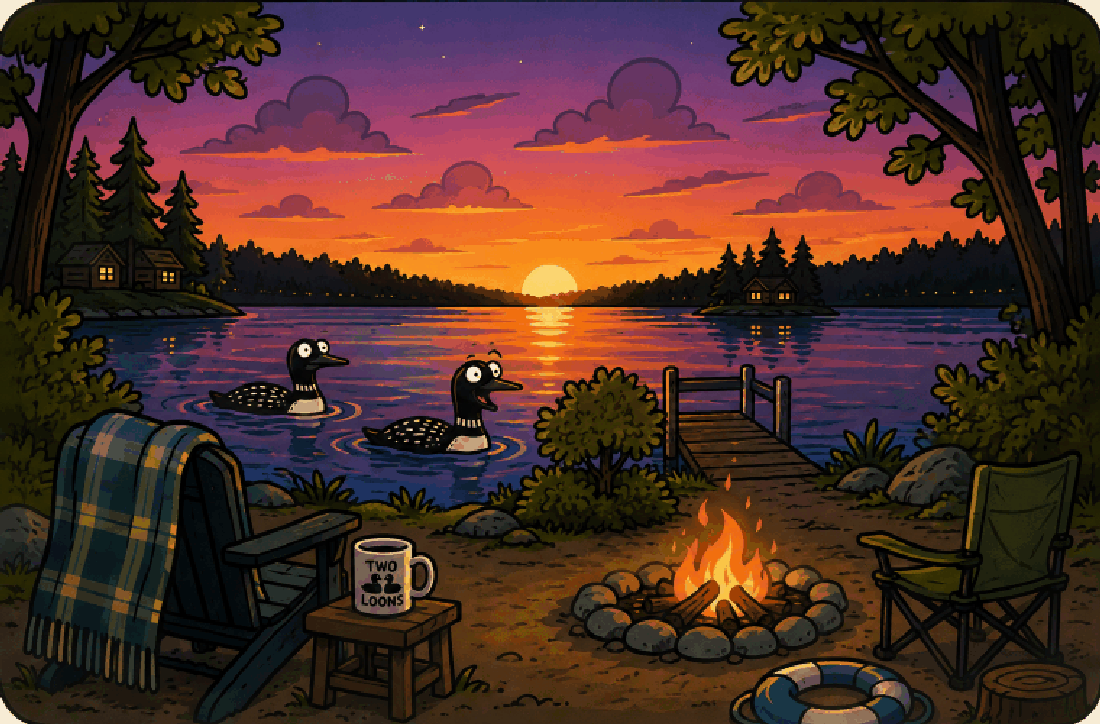
Two loons on a lake at sunset, beside a campfire, two camp chairs and a Two Loons mug
The target. Everything in this picture except the paper deck.

Loonaholics and Loonbassadors

There isn't a mailing list, a launch event or a countdown. There are two loons and an Instagram account.

Available now

Become a Loonaholic

Follow along and you'll see each game as it lands, each thing the planner learns to do, and whatever the loons are doing to each other that week.

Not yet

Become a Loonbassador

Bring people to the table, wear the badge next to your name. It needs the Two Loons account above before it can mean anything, so it's honestly post-beta.

The twenty-four loons you can play as, the badges, and the callsigns are all on the Frustration page, where they belong.