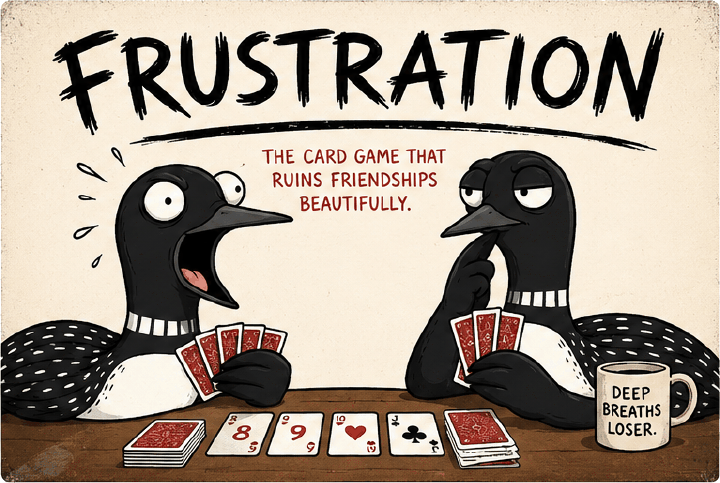
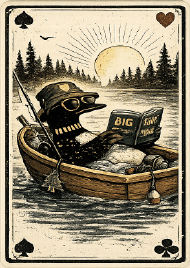
We play Frustration everywhere. It still tastes like camp — which is the whole reason it
was worth building anything.
A deck of cards is a time machine with a very short range. Ours goes to a lake: a screen
porch, a week of pancakes and bug spray, somebody quietly taking the entire table apart
while pretending not to. That's not what the game is about. It's what the game
is — you deal it and you're briefly back there.
The people are the hard part. They moved. They had kids. Work got worse. Somebody can
usually give you two or three hours; what they can't give you is a fourteen-hour round
trip, a whole weekend, cards until one in the morning and the drive home. So the game
doesn't happen, and neither does the evening, and that's the actual loss — not the cards.
We're all on our phones anyway. This is a better thing to do with one than scrolling, and
unlike scrolling it needs three other people. That's the thesis, such as it is: not a card
game app, but a reasonable use of a phone that ends with you having spent two hours with
somebody you miss.
It runs the other way too. One iPad going round a table is small kids learning cards and
strategy, quietly, instead of winding each other up or disappearing into YouTube — which
is why pass-and-play isn't the afterthought it looks like, and why the game is built to be
safe for an eight-year-old. Most of what's below is that decision showing its work.
Rank climbs on matches finished, never won
The person we want more of is the one who turns up and stays to the end. A ladder that
pays for winning makes the best player's presence a cost to everybody else, and hands
everybody else a reason to quit at level six. Finishing is what we're actually asking
for, so finishing is what pays.
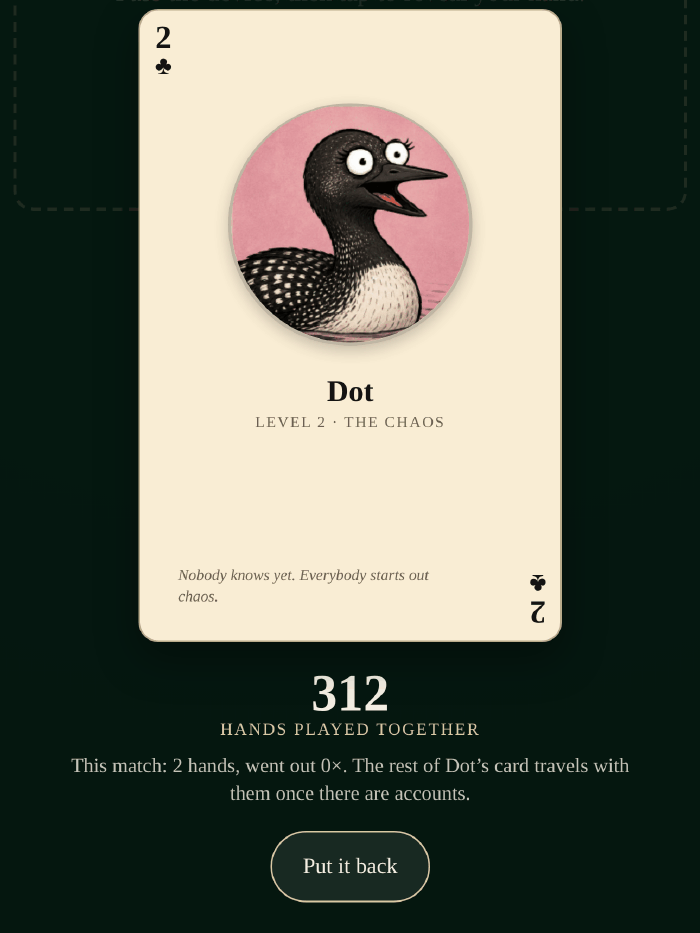
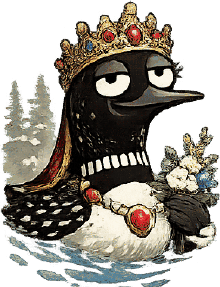
Everybody starts as a 2 — the wild card, worth the most against you, nobody quite sure
what it's about to do. Which is a beginner exactly.
One number belongs to a pair of people
Hold somebody's face at the table and their card says 312 hands played
together. Not a win rate. Not a ratio. A count. It only goes up, it cannot be lost,
and it doesn't belong to either of you on your own.
On your own card it flips to the comparative version — who you've played the most cards
with — because asking how many hands you've played with yourself is a silly question.
That's the number the whole thing is for; everything else is scaffolding holding it up.
Your suit is derived, and it moves
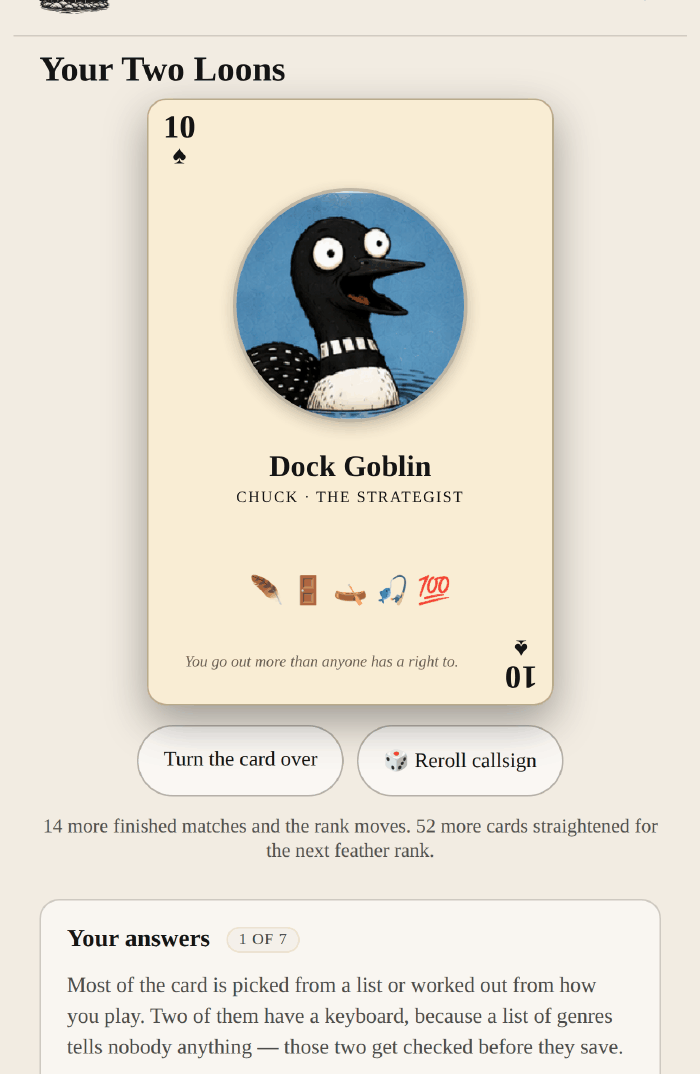
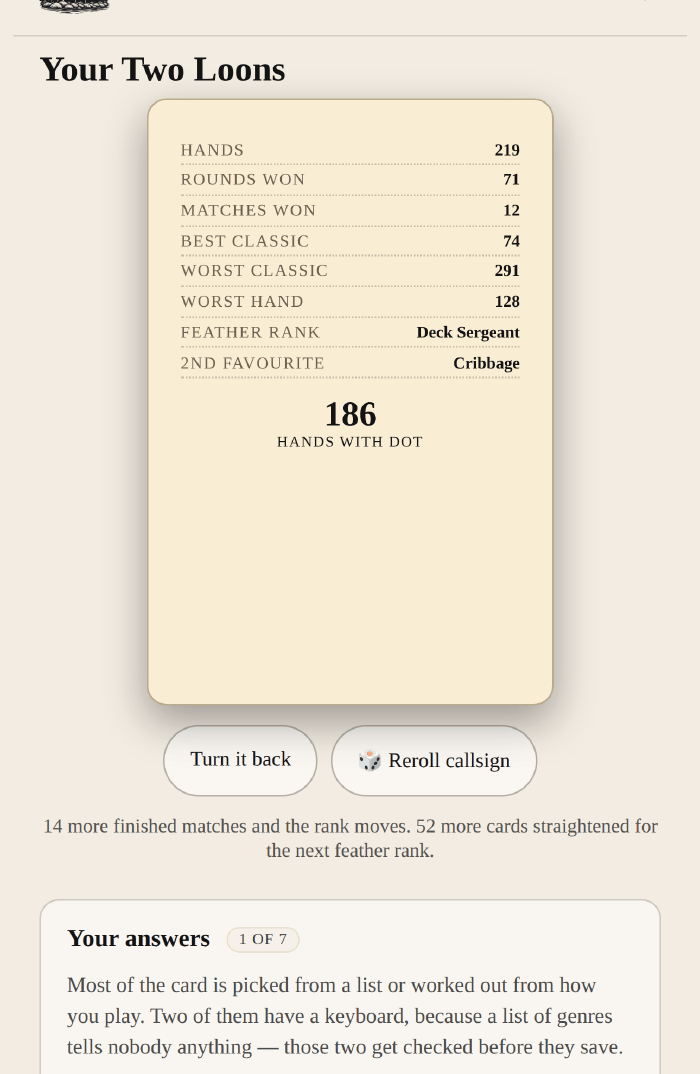
Not a personality quiz. It comes off three things the game already knows: how often you
go out, what your hands average, and how bad the worst one got. Play differently for a
month and the card changes underneath you.
Under six hands everybody is Clubs, and the card says so out loud rather than pretending
— “Nobody knows yet. Everybody starts out chaos.” Every suit states its reason
underneath, which is what makes it feel earned instead of assigned.
Picked beats typed
Everything expressive on your card comes off a written list. That isn't a first line of
defence, it's the entire moderation model: a pick-list cannot carry a slur, so there's
nothing to filter, queue or review. The callsign rolls from two written columns for the
same reason.
It's also why the answers are funny — the writing is ours on purpose rather than a
stranger's on demand. Camp confession: “I will not stop talking about the hand I lost
in 2019.” Era: Oregon Trail Survivor, which is optional, never a number,
and never used for anything except the joke.
This is a game rated 8+, meant for your family, your oldest friends and the neighbours.
Two questions earn a keyboard because a list of genres tells nobody anything, and they
pay for it with a filter — no links, no contact details, no way to move a conversation
somewhere nobody can see it.
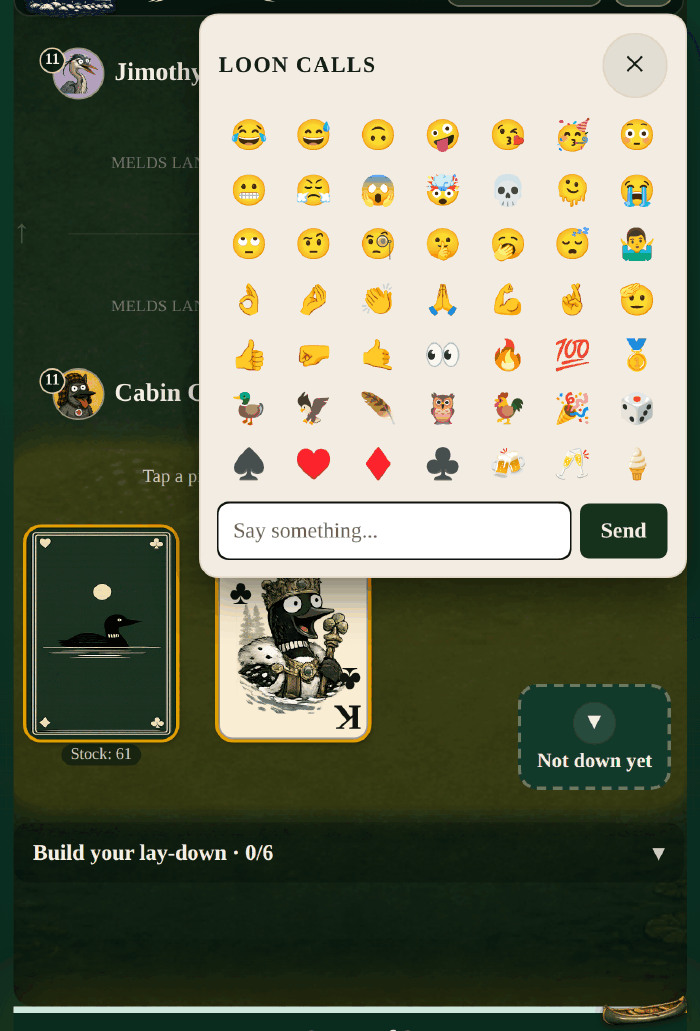
With strangers, emoji only
Sit down with people you've never finished a match with and there is no text box —
forty-nine emoji and nothing else. The keyboard unlocks by playing a whole match
together.
It's the cheapest safety feature we have and the one we're happiest with, because it
isn't a moderation queue. It's an order of operations.
And one rung that rewards nothing whatsoever
You can straighten the discard pile. It does nothing for your hand. There are eight
ranks for it anyway, from Nudger up to Patron Saint of Straight Edges.
It's the one thing here you cannot be bad at — you can only decline to bother — which is
exactly why it's the one place we let the joke be the whole point.
None of that is a moral position about games. It's what falls out of building for a number
that can't go down: nobody has an incentive to quit over a total that only rises, and nobody
needs protecting from a field with no keyboard in it.